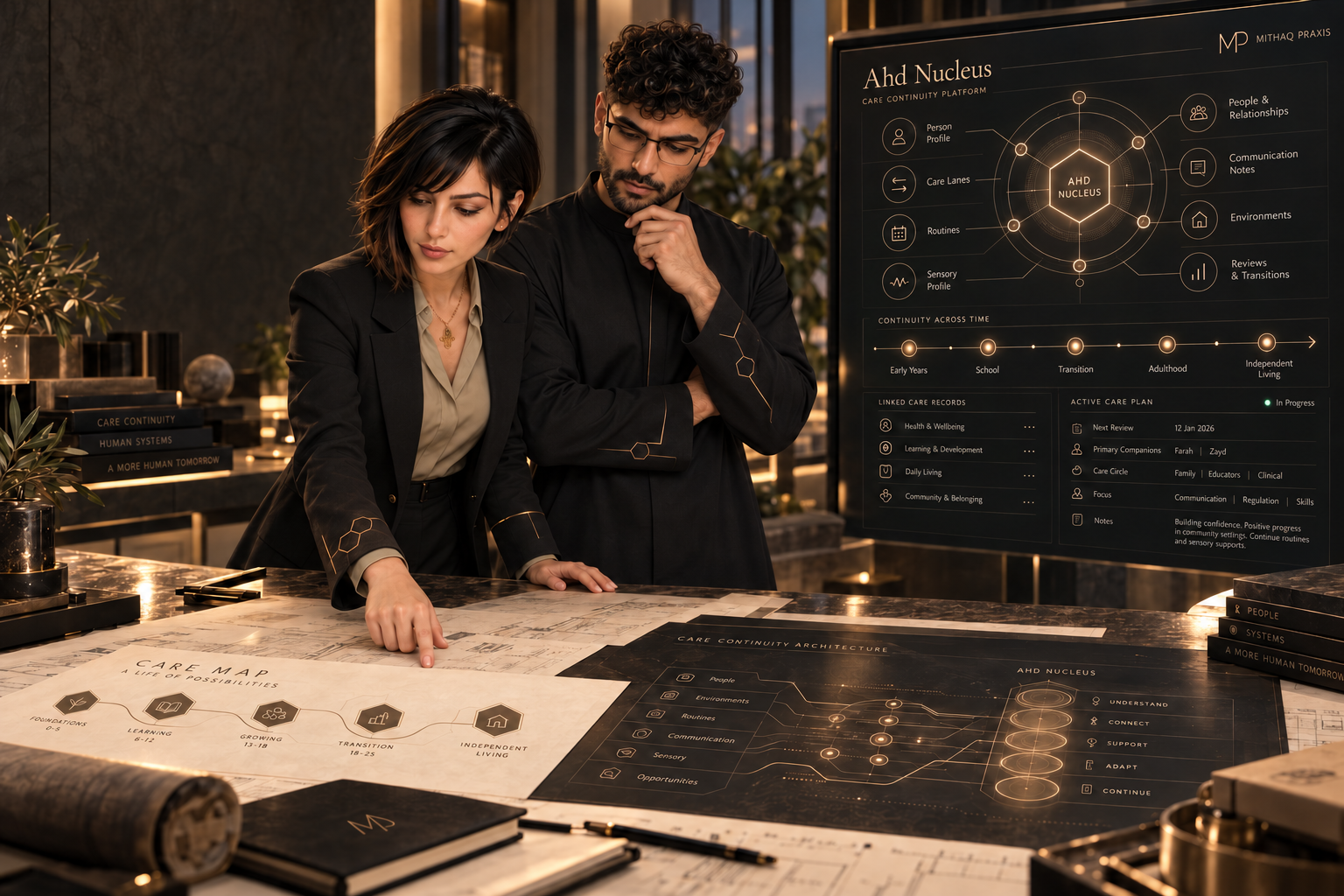
Two Mithaq Praxis researchers working together over a care architecture manuscript.

Mithaq Praxis · Phase One complete · 32 public papers

Amanah
Companions

Care architecture before companion spectacle.

Phase One begins with the person, human authority, communication, continuity, and data dignity—before any body or product claim.
01Research atlasPublic · source-linked · human-led
Scroll to enter
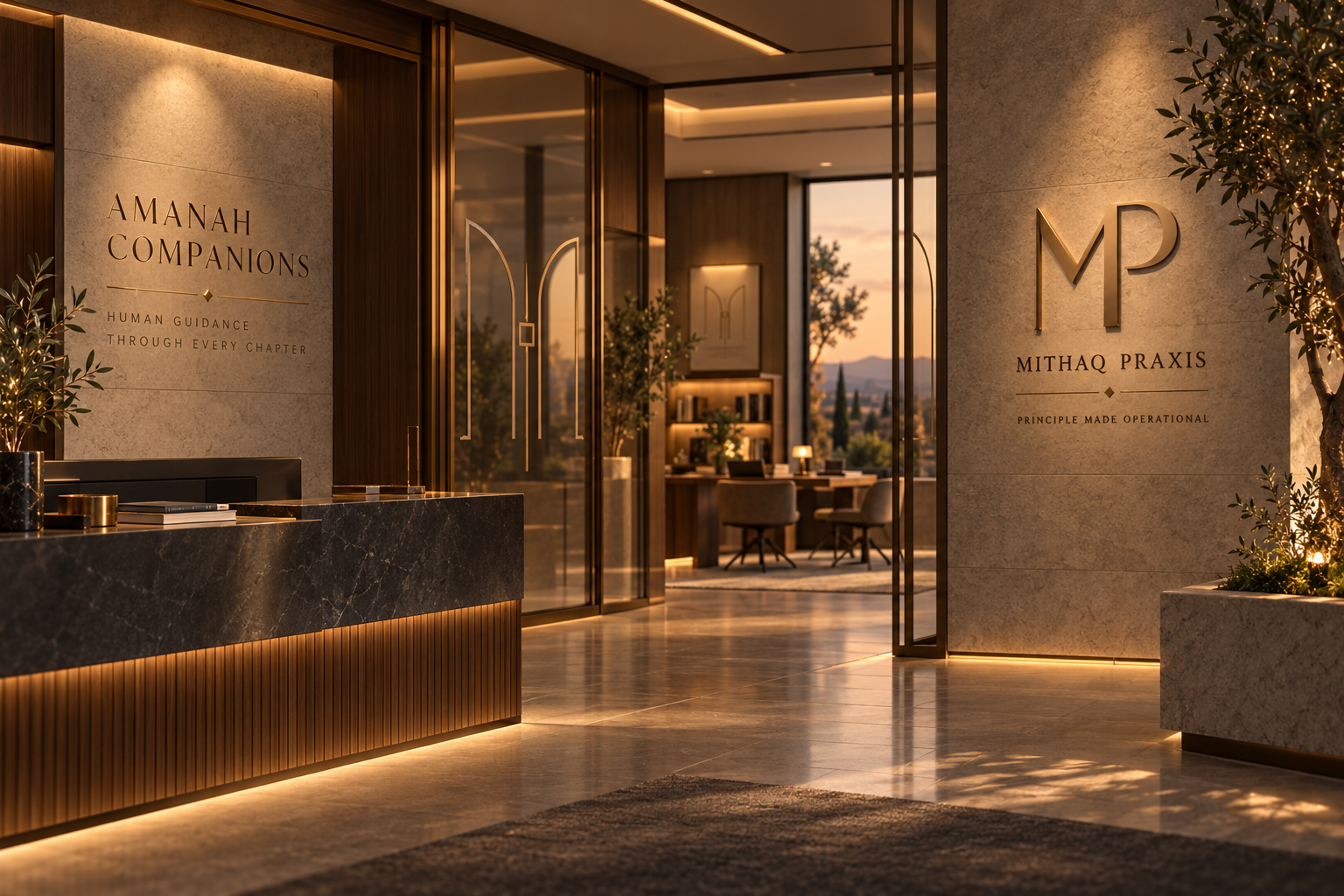
A warm conceptual research room opening towards an evening landscape.

The companion is not the starting point.

The starting point is a life already in motion: relationships, communication, sensory experience, changing authority, uncertainty, and the right to stop.

Conceptual Amanah research room · not a deployed facility

Six pathways through Phase One

Thirty-two papers become six authored routes through authority, personhood, communication, continuity, memory, and responsible building.


Researchers reviewing written decisions at a shared table.
01Human authority6 papers
Researchers considering a person-centred profile beside paper notes.
02Know the person5 papers
A researcher standing beside a conceptual communication map.
03Communication and regulation3 papers
A researcher moving between records in a long-term research archive.
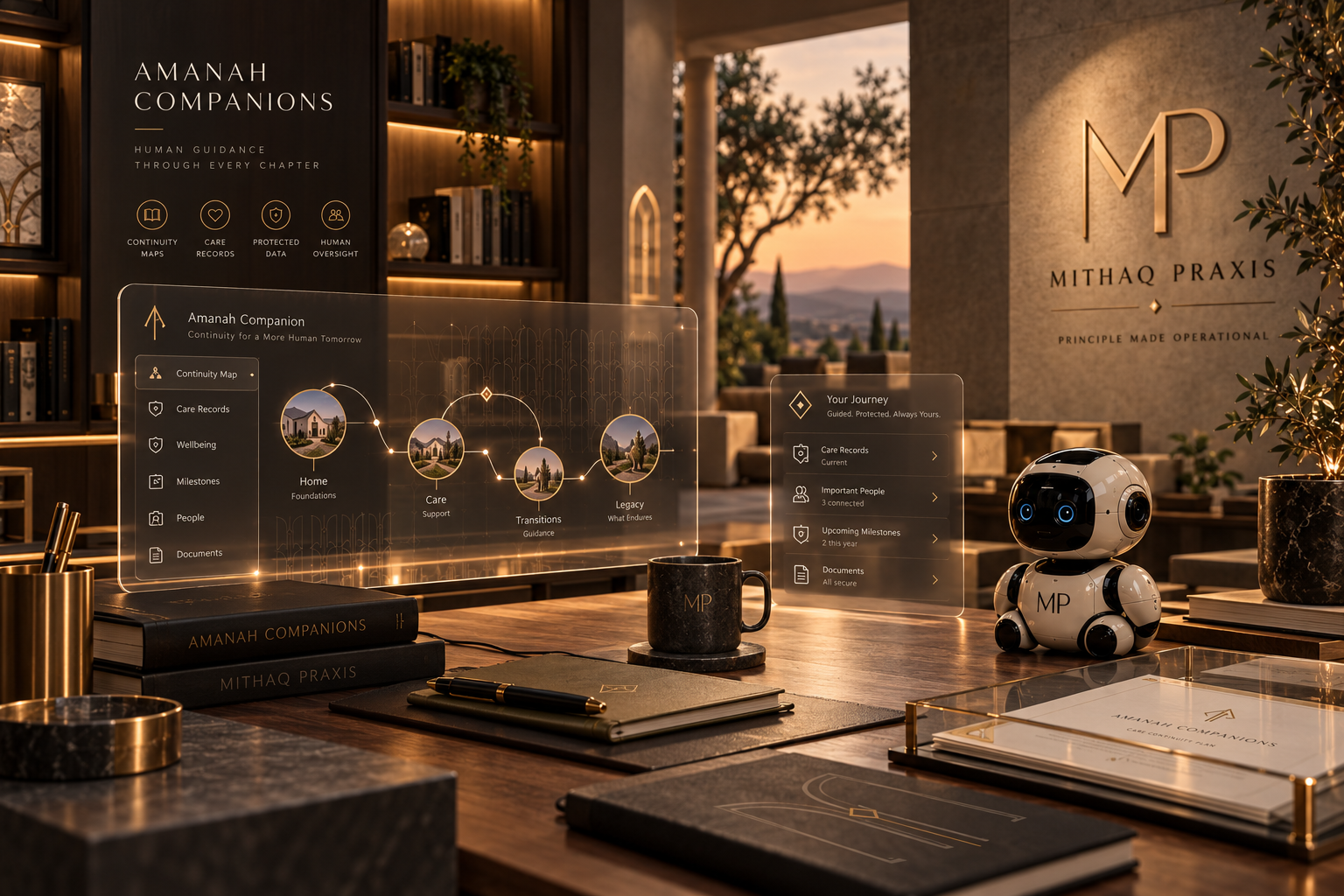
04Continuity over a life5 papers
Researchers reviewing information together rather than leaving interpretation to a system.
05Memory without surveillance6 papers
An archive of publications and records beside a deliberately small companion device.
06Build last, govern first7 papers

The
framework

One person.
A governed continuity spine.
Bounded assistance.

Researchers examining a layered conceptual care-continuity system.
A governed continuity spineIllustrative research visual · Phase One

Authority remains visible at every consequential step.

Propose→Review→Approve→Override→Stop
Open the complete framework

Read Phase One
as a journey.

Eight lead papers carry the thesis from human authority to portable continuity. The full atlas remains available beneath them.

01 · Begin here

Human-Led Care in an AI-Assisted Future

This paper supplies the governing public thesis: assistive capability must not become machine authority. It places the disabled person and the care circle ahead of the system, distinguishes human-led from human-only, and argues that limits, clinician boundaries, privacy, and human decision-making must be built into the interface.

Read the paper

Three people in careful conversation around a conceptual care-planning interface.
Human-led careIllustrative research visual · Phase One
  1. 02
    Lead paperThe Amanah Companion Framework: Spine, Stem Cells, and Care Memory
  2. 03
    Lead paperA Parent’s, Guardian’s, or Carer’s Knowledge as Infrastructure
  3. 04
    Lead paperThe Person is the Continuity Subject
  4. 05
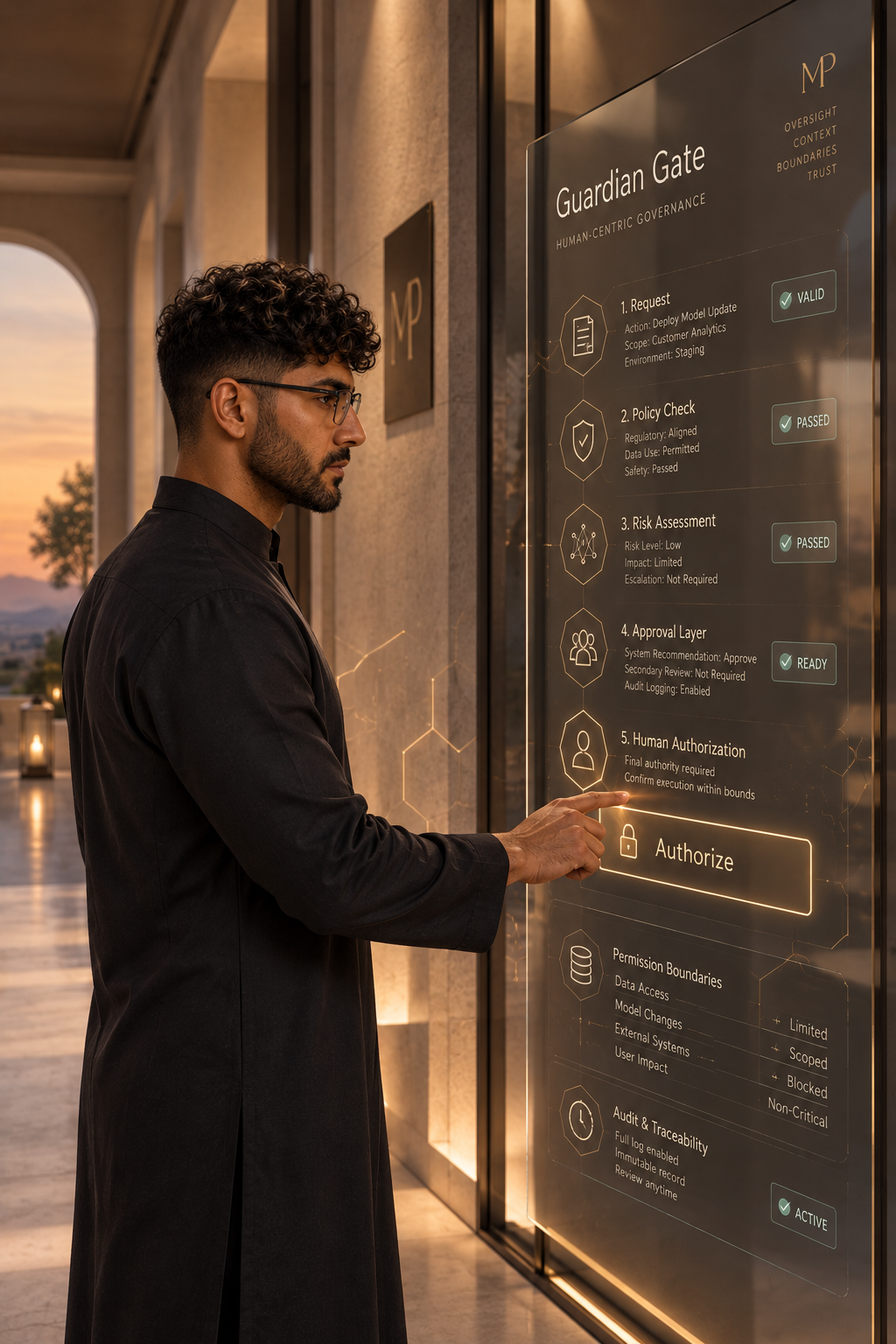
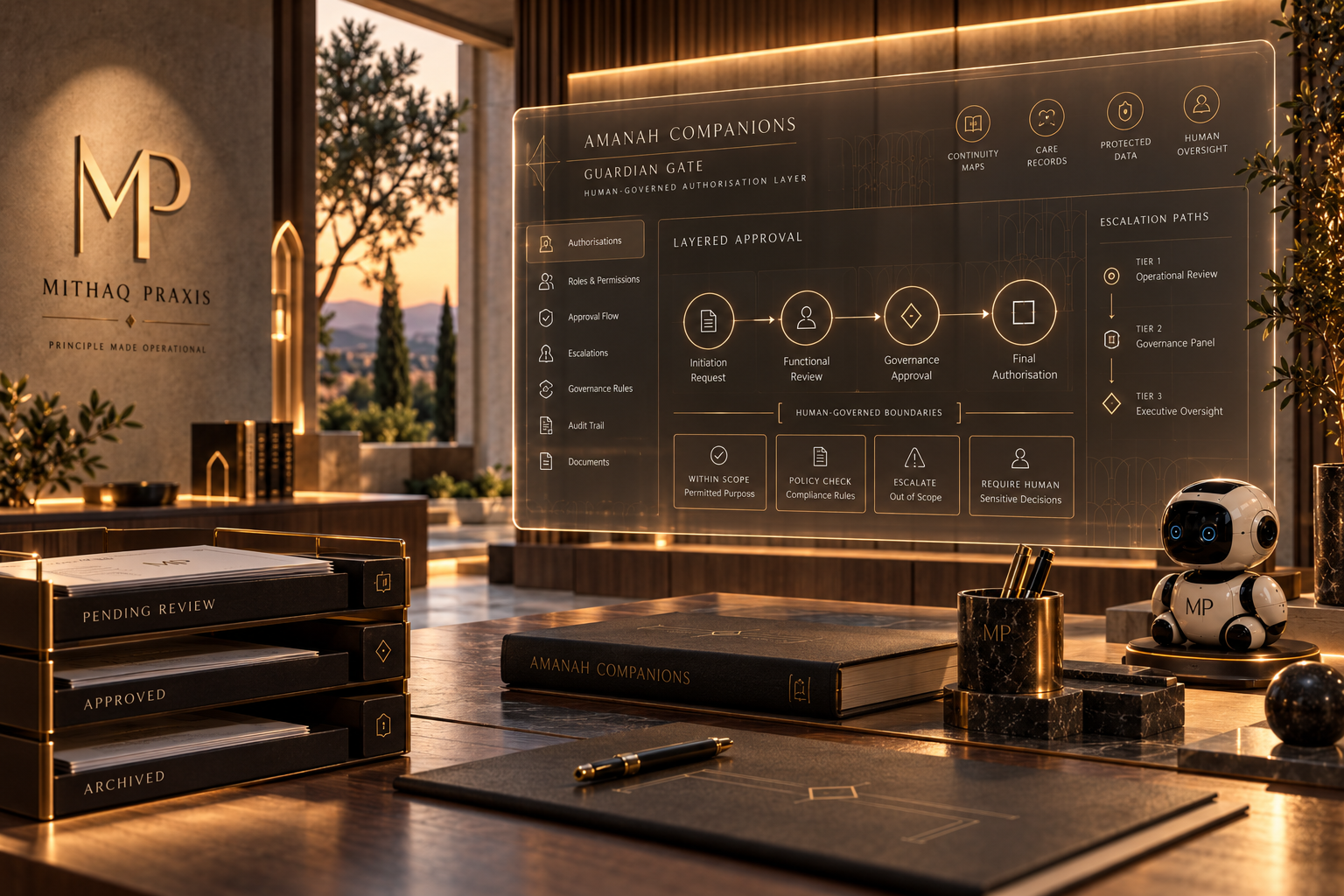
    Lead paperThe Guardian Gate: Human Authority in AI-Assisted Care
  5. 06
    Lead paperSupport, Not Surveillance
  6. 07
    Lead paperThe Model is not the Companion’s Memory
  7. 08
    Lead paperGrowing Up Without Starting Over

Stay with the difficult questions.

Browse all 32 papers

Twenty-six views into
the research.

Each image is a concept render: a way of making relationships, authority, evidence, and bounded assistance visible—not a claim that an Amanah product or facility has already been deployed. Secondary studies appear only as identity-clean derived copies.


Two Mithaq Praxis researchers working together over a care architecture manuscript.
01Research in practiceResearch visual
A warm conceptual research room opening towards an evening landscape.
02The research roomResearch visual
Researchers mapping relationships between people, knowledge, systems, and public papers.
03Research architectureResearch visual
Researchers examining a layered conceptual care-continuity system.
04A governed continuity spineResearch visual
Three people in careful conversation around a conceptual care-planning interface.
05Human-led careResearch visual
A research desk holding publications, notes, and a conceptual framework display.
06Evidence and source traceResearch visual
Researchers connecting manuscripts, systems maps, and publication work.
07From principle to practiceResearch visual
A conceptual system review surface beside written notes and a small companion device.
08Bounded system reviewResearch visual
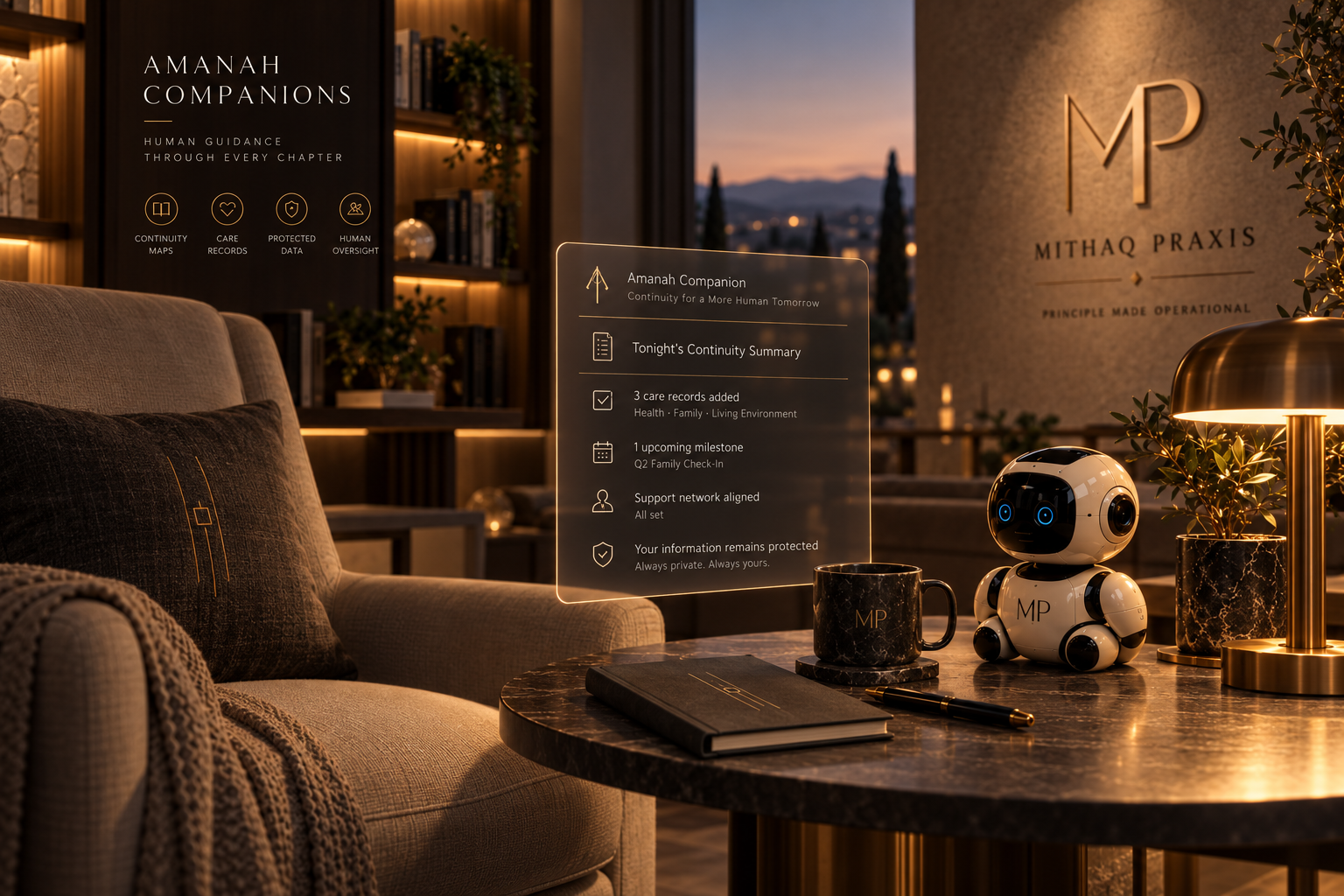
A quiet research still life with publications, a conceptual interface, and a small companion device.
09Continuity materialsResearch visual
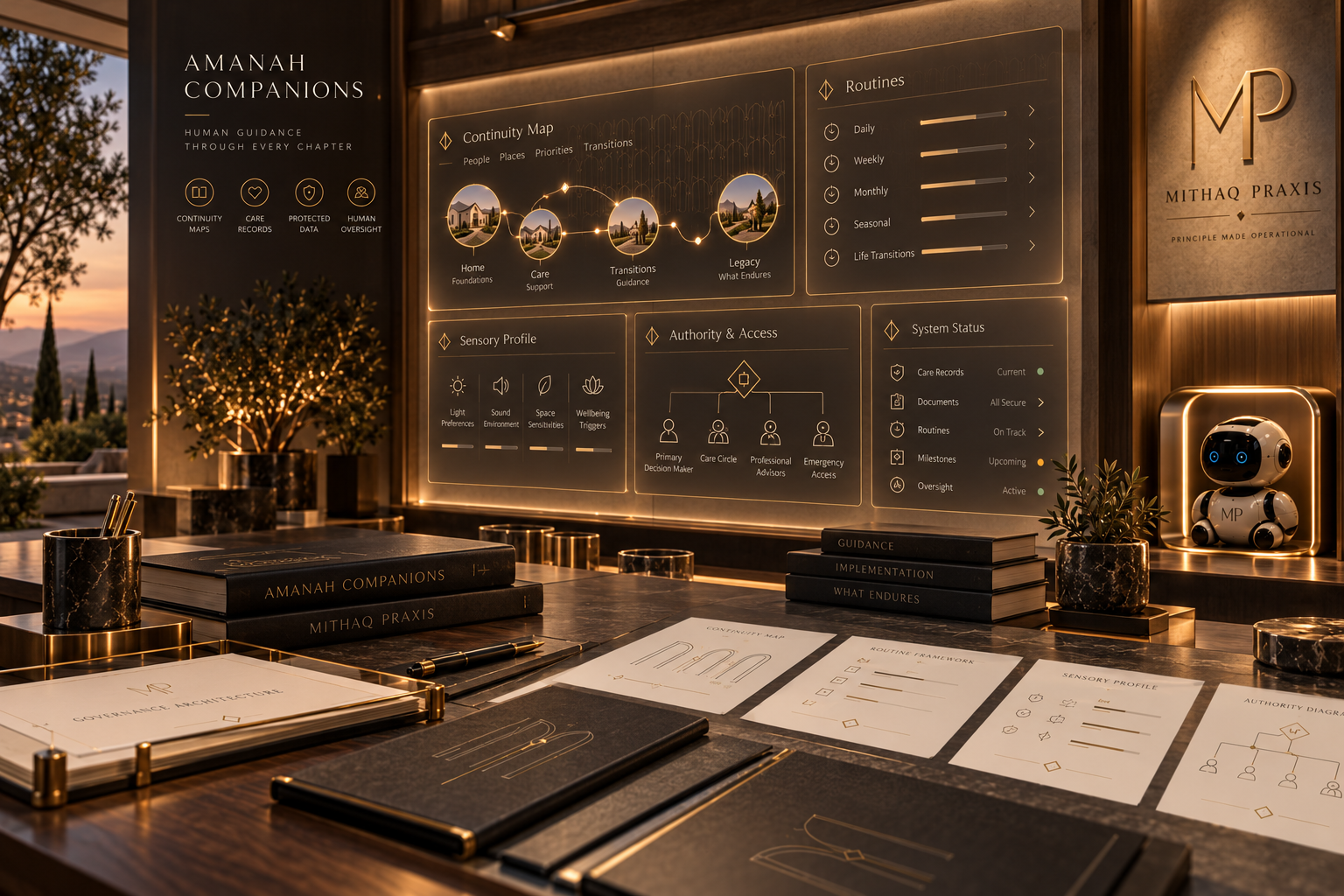
A conceptual overview of connected care and governance work displayed in a research room.
10Public system overviewResearch visual
A conceptual framework screen surrounded by manuscripts and source material.
11Sources before claimsResearch visual
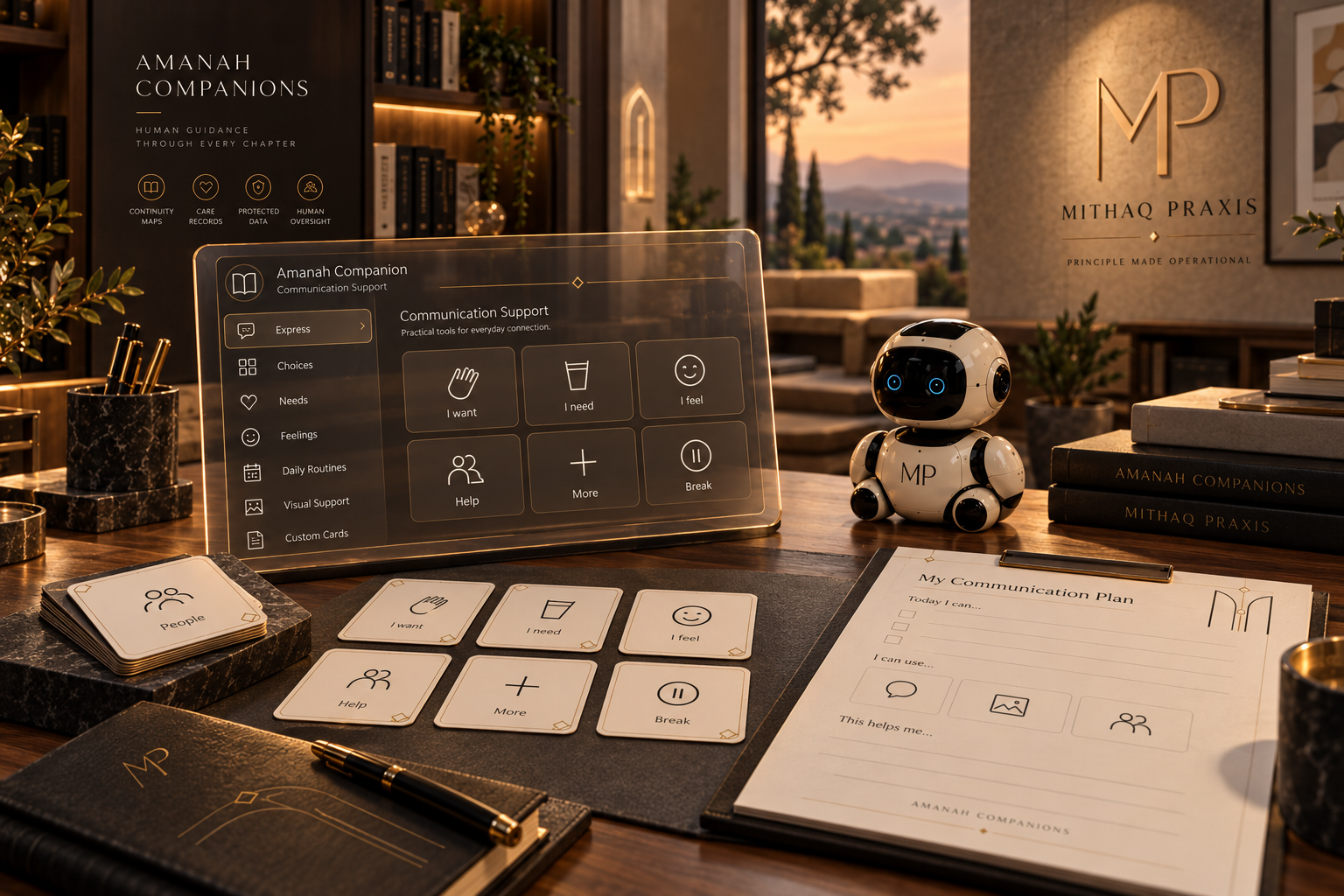
A conceptual arrangement of tools, permissions, support modules, and paper notes.
12Bounded modulesResearch visual
A conceptual care interface situated among research books and review materials.
13Interface as governanceResearch visual
Researchers studying a large conceptual continuity atlas across a table and glass interface.
14Continuity atlasIdentity-clean derived visual
Researchers reviewing a person-centred conceptual continuity profile and support network.
15Care continuity profileIdentity-clean derived visual
Two people examining a conceptual family care dashboard in a warm research room.
16Family care interfaceIdentity-clean derived visual
A researcher writing beside a conceptual panel about care, adab, dignity, and direction.
17Companion influenceIdentity-clean derived visual
Researchers developing a conceptual care plan with routines, sensory needs, and human supports.
18Care plan and sensory profileIdentity-clean derived visual
Two researchers walking together while reviewing a tablet, with a small companion device nearby.
19Governance in practiceIdentity-clean derived visual
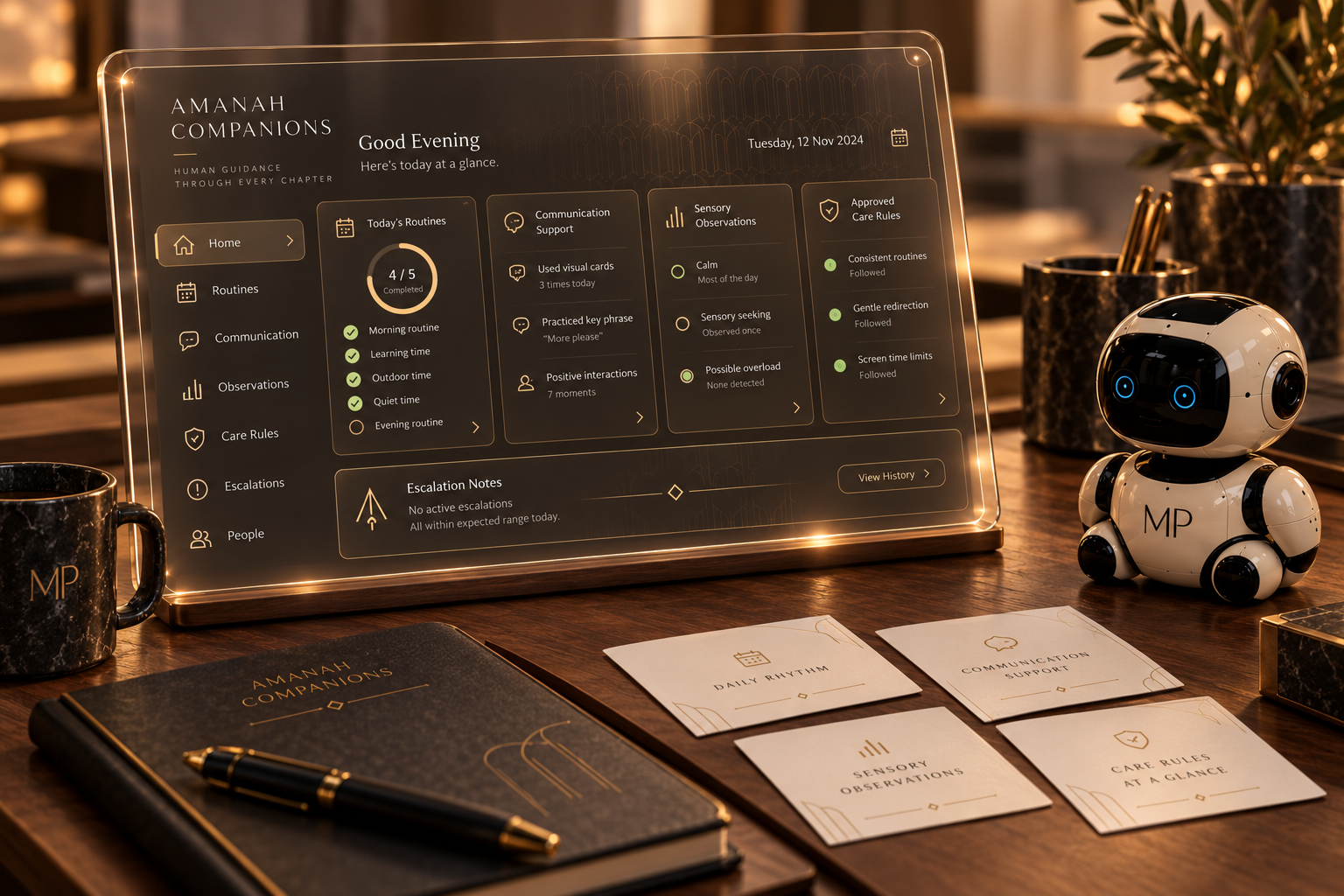
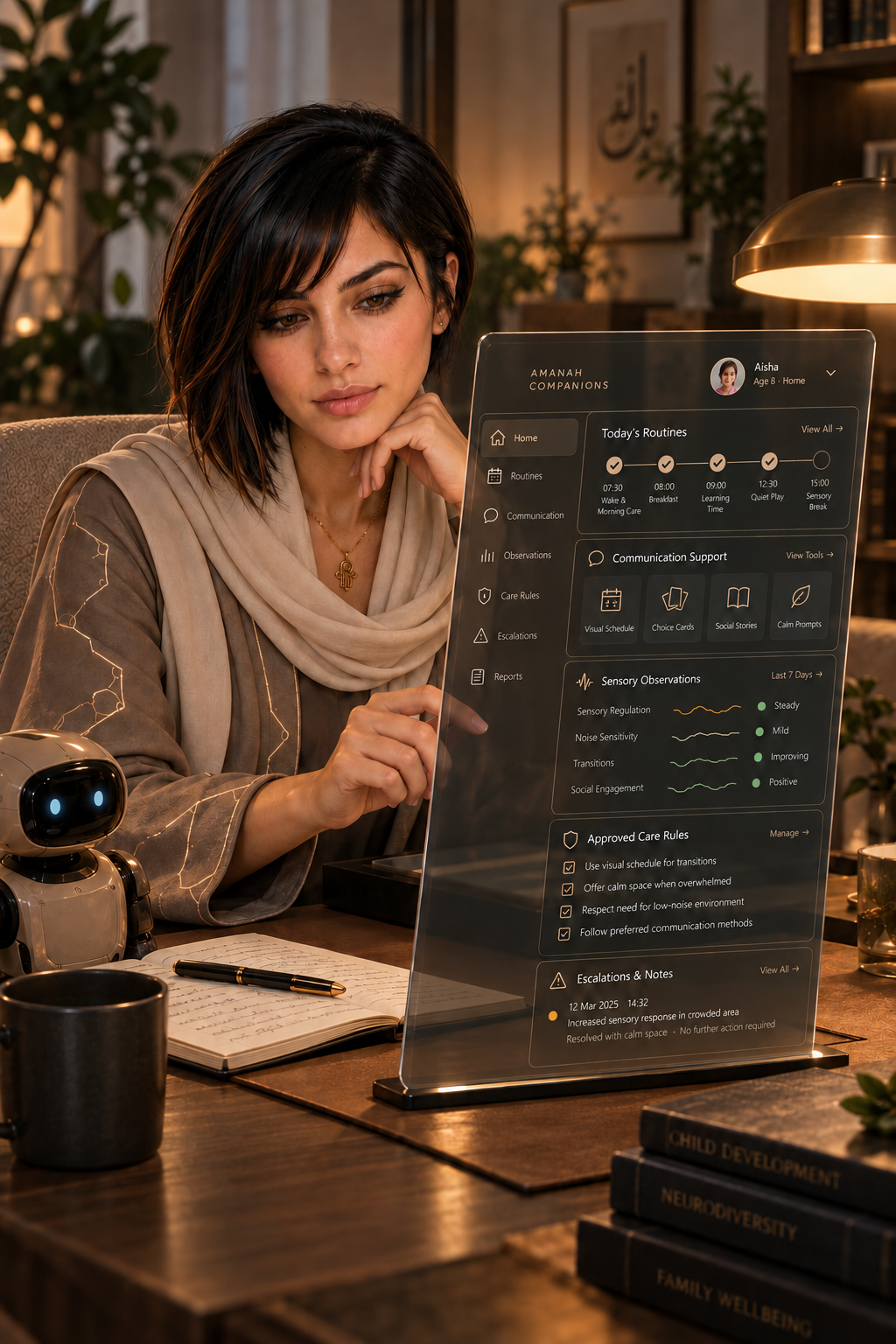
A researcher using a conceptual routine, communication, and sensory support interface.
20Accessible routine interfaceIdentity-clean derived visual
Researchers examining an Ahd Nucleus continuity architecture and life-course care map.
21Continuity architectureIdentity-clean derived visual
Researchers beside a human-values map and bounded companion-system materials.
22People, AI, and purposeIdentity-clean derived visual
A researcher reflecting beside a conceptual practice and wellbeing interface.
23Presence without dependencyIdentity-clean derived visual
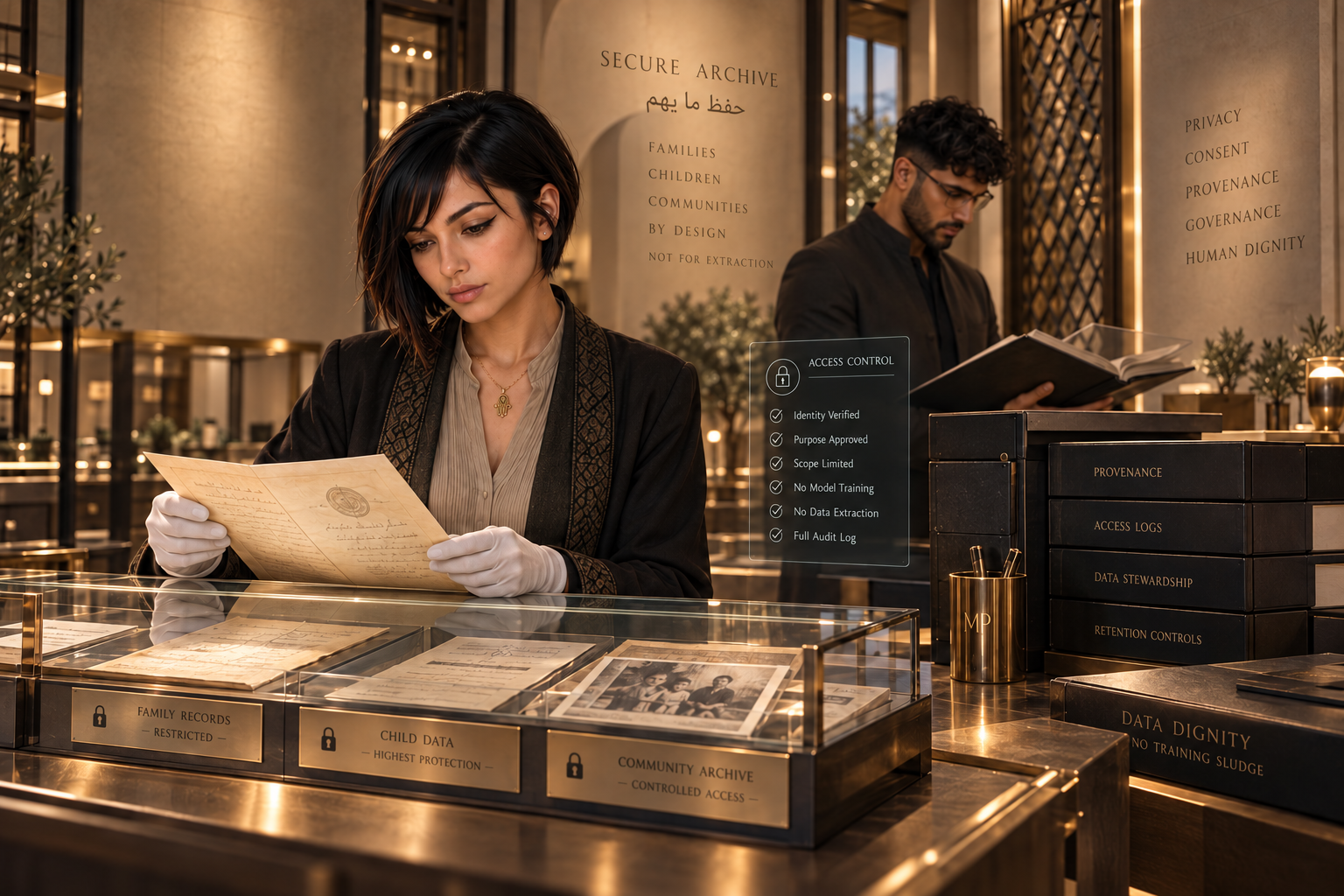
Researchers handling a protected archive with visible access control and data-stewardship boundaries.
24Data dignity archiveIdentity-clean derived visual
A researcher working among manuscripts and a conceptual map of care, dignity, governance, and human flourishing.
25Research and governance overviewIdentity-clean derived visual
Researchers reviewing permission tiers, care constraints, escalation, and final human approval.
26Guardian Gate reviewIdentity-clean derived visual
Drag or use the controls to explore
A research desk holding publications, notes, and a conceptual framework display.

A transparent
bibliography.

Browse the external sources that shape Phase One and see which Amanah papers cite each one.

32 published papers155 unique external sources06 research pathways
Inspect the references
A conceptual overview of connected care and governance work displayed in a research room.

Bring thoughtful questions to the framework.

The next useful step is careful conversation—not premature deployment.

See ways to collaborate Connect with Farah on LinkedIn i@mithaqpraxis.com

Please do not send children’s records or sensitive care data in an initial enquiry.

Play or quiet Mithaq Praxis — Inner Universe, an original calm ambient loop, with restrained interface tones.